How to Develop Your Wine Palate (Without Feeling Like a Wine Snob)
The other day at work, I was chatting with a couple about a new wine to try. As I described it, the woman said, “Wow, you must have a very sensitive palate!”
It got me thinking — developing a palate doesn’t happen overnight. It’s a journey.
When I first started drinking wine, I honestly couldn’t tell the difference between a Cabernet and a Merlot. It was red… and that was about it.
Back when Tom and I first started dating, he took me to meet his dad for dinner. While we were deciding what wine to order with our steaks, Tom lobbied hard for a Gewürztraminer (a sweet German white). His dad vetoed him and ordered a Meiomi Pinot Noir instead — a whole new wine for me at the time. The pairing worked beautifully.
For Tom, it was revolutionary — from that night on, he became a Pinot Noir devotee.
Fast forward seven years: We’ve explored old-world and new-world wines, and now we’re back to loving crisp, expressive old-world whites. Our palates have definitely grown up — and so can yours.
So, What Exactly Is a Palate?
Your palate is basically your ability to taste and recognize flavors. It’s your taste buds, your tongue, and even your nose working together.
Developing it is all about how you approach a glass of wine.
You know those movie scenes where the “wine snob” swirls, sniffs, and stares into their glass like they’re solving a murder mystery?
There’s actually a tiny bit of truth there.
Learning to taste wine thoughtfully — without the snobbery — can seriously level up your wine game.
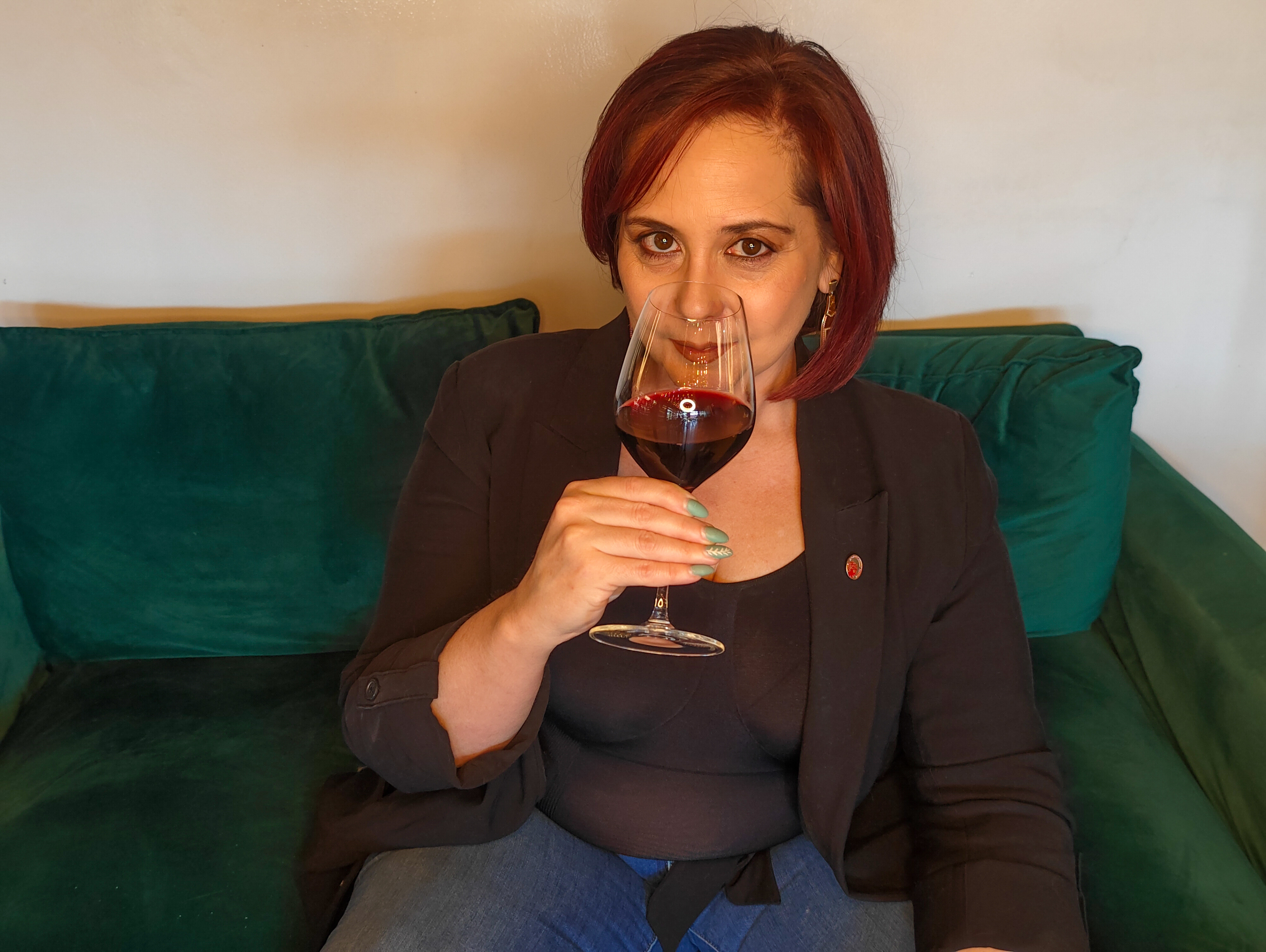
How to Develop Your Palate: The Five S’s
Here’s an easy way to remember how to approach wine: See, Swirl, Sniff, Sip, Savor.
1. See
Look at your wine.
Is it a deep garnet? A light brick red? A sunny straw yellow?
Noticing color hints at the grape variety, age, and even body of the wine.
2. Swirl
Give it a little swirl.
This aerates the wine, helping it “wake up” after being bottled tight.
Look at the legs (those streaks running down the glass) — thicker, slower legs usually mean higher alcohol.
3. Sniff
Get your nose in there. Really smell it!
At first, you might not pick up anything beyond “smells like wine,” and that’s fine.
Over time, you’ll start noticing categories like:
- Tree fruits (apple, pear, apricot)
- Citrus (lemon, lime, orange)
- Berries (raspberry, cherry, blackberry)
- Earthy notes (leather, tobacco, fresh-cut grass)
Pro tip: You can even buy scent kits if you want to train your nose!
4. Sip
Take a small sip — not a gulp.
Let it linger on your tongue. Maybe even swish it around a little.
Think about what you taste, and jot it down if you want. This builds your sense memory over time.
5. Savor
Reflect on the flavors. How do they change from the first sip to the finish?
Does the wine feel silky? Crisp? Velvety?
This step is where a lot of the magic of wine appreciation happens.
Final Thoughts
Next time you pour a glass of wine, remember the Five S’s — it just might transform the way you taste.
Have you made any fun discoveries with wine lately? 🍷
Drop a comment below or tell us what you’d love to explore next here at The Purfect Pour!
Let’s sip, learn, and savor together.